Even successful products and processes often overlook one thing: the unspoken needs of their users. People often settle for complicated workflows, unclear functions, or unnecessary intermediate steps. This is exactly where the best starting points for real improvement emerge — whether through a new feature, an optimized interface, or an entirely new offering.
The discovery phase is the starting point: our goal is to make hidden user needs, pain points, and market opportunities visible. The focus is not on the solution, but on understanding: What works, what doesn’t, and where will investments actually pay off?
When user needs remain invisible
The challenge
Without sound user analysis, central pain points and real needs remain invisible. This results in solutions that miss the target audience and opportunities that remain untapped.
From user behavior to a clear picture
Our approach
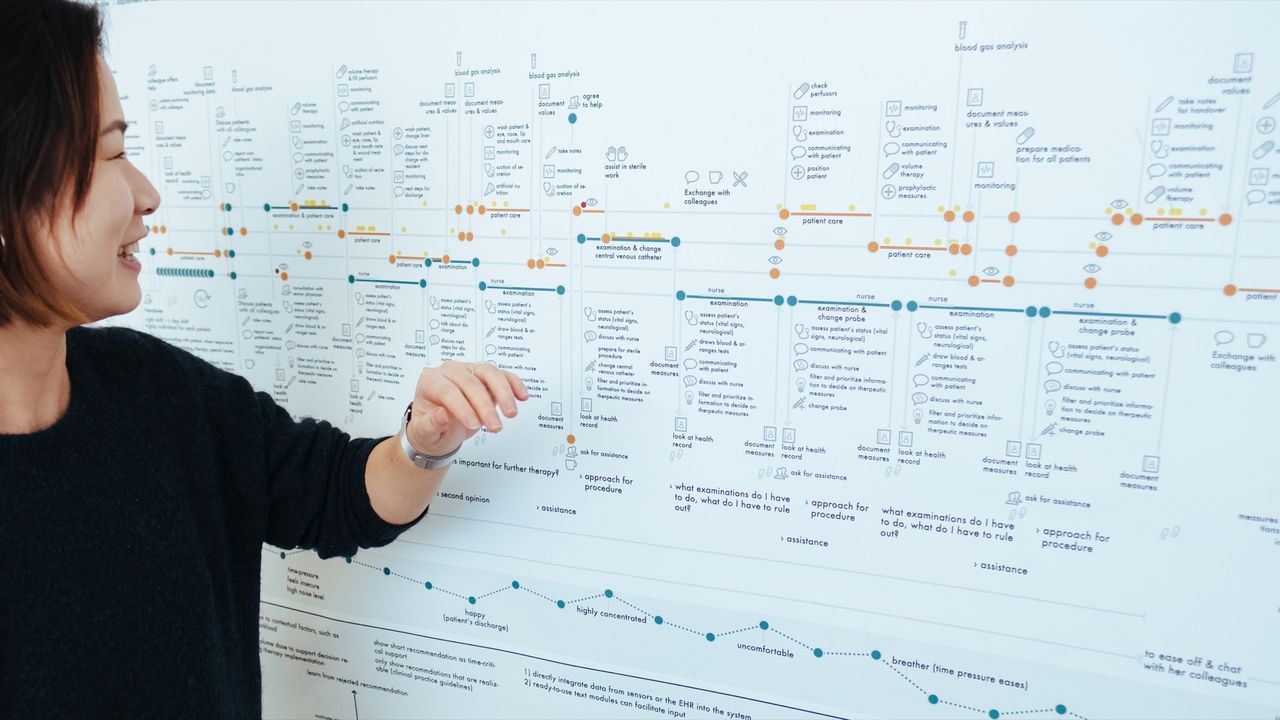
In the discovery phase, we systematically analyze how people interact — both consciously and unconsciously — with your products or services. We combine qualitative user research, behavioral observation, data analysis, and workshops into a clear overall picture. In doing so, we uncover patterns, needs, and potentials that were previously hidden, creating a resilient basis for strategic and innovative decisions.
We link qualitative insights with quantitative validation: hypotheses are tested, market potentials are evaluated, and opportunities are substantiated. This way, you don't just know what people need, but also where investment is worthwhile.
Clarity for strategic decisions
Framing AI meaningfully
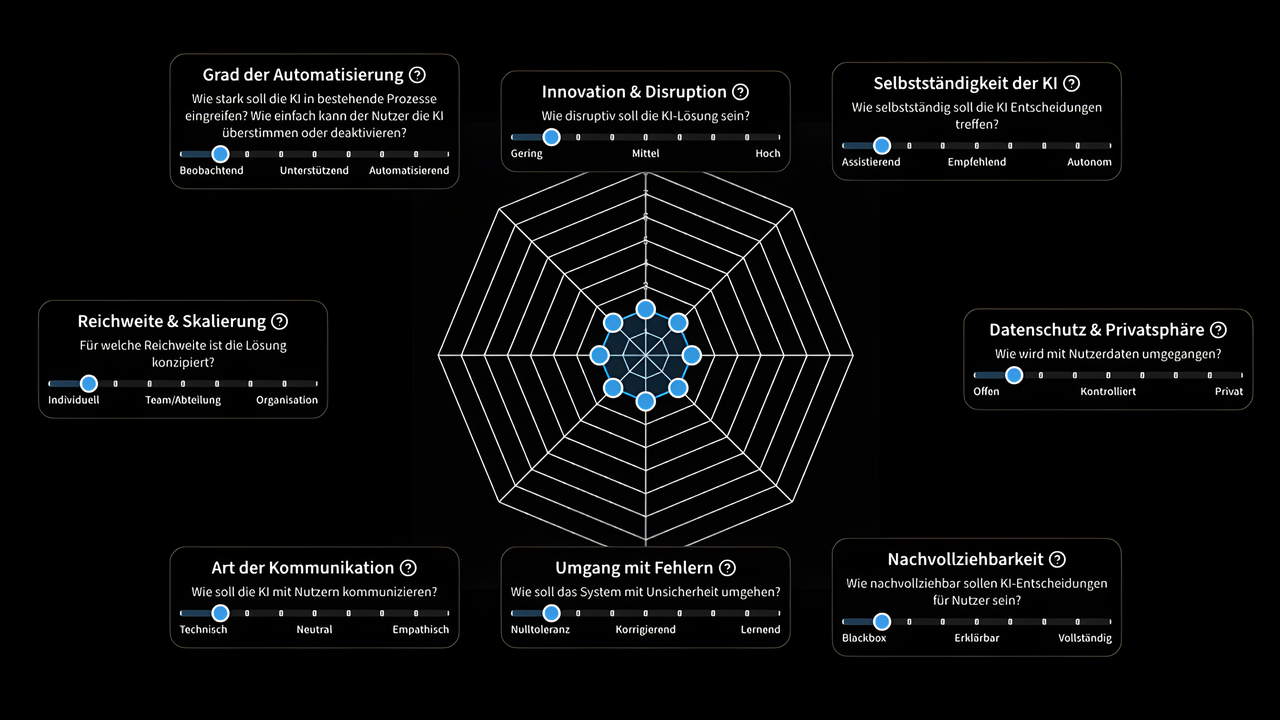
We assess if and where AI can act as a meaningful lever. Our starting point isn’t the tools, but resilient questions: Which user problems can be solved better through assistance, automation, or pattern recognition? What data, processes, and responsibilities would be required? And where is AI not the first or right approach? This ensures we don't just generate isolated AI ideas, but prioritize opportunities that align with real needs, strategic goals, and existing systems.
With our proprietary AI Compass, we visualize which use cases are viable and how they align with user needs, data availability, and organizational readiness.
In the end, you will know exactly which needs, problems, and potentials actually exist among your users. These insights form the basis for strategic decisions, targeted innovations, and meaningful prioritization.
Revealing opportunities through observation, data analysis, validation, and journey insights aligned with real user needs.
Why discovery makes sense
Competitive advantage through the early identification of user needs and market opportunities.
De-risking innovation: Validated insights over mere assumptions.
Purpose-driven development of new products, features, and services based on proven demand.
Driving willingness to pay: Differentiating through unmet, unspoken needs.
Optimized resource allocation driven by a clear understanding of key levers.


)
)
)
)